Foldable phones have spent years trying to prove that a flexible display is more than an expensive demonstration. Samsung’s Galaxy Z Fold8 Ultra, Fold8 and Flip8 arrive at a point where the basic engineering question has changed. The hinge works, flexible OLED panels are established and buyers understand the concept. The more useful question is what each shape is actually for.
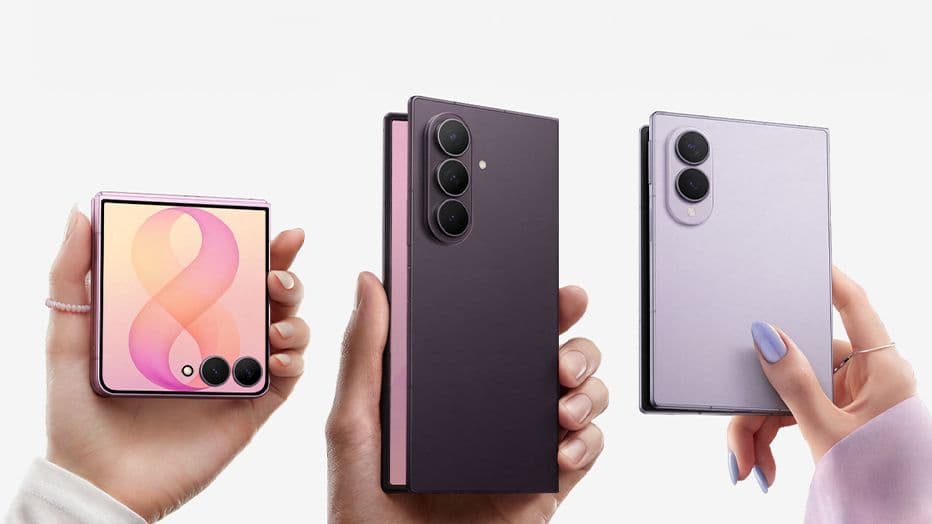
Samsung’s 2026 lineup answers by splitting the category into clearer roles. The Fold8 Ultra prioritises a large workspace and high-end performance. The standard Fold8 changes its proportions to make reading and video more natural while reducing weight. The Flip8 treats compactness and its outer screen as the centre of the experience. Instead of presenting one foldable idea, Samsung is building several products around different patterns of use.
Maturity looks like fewer compromises
Early foldables asked buyers to tolerate thick bodies, visible creases, unusual aspect ratios and fragile-feeling hardware in exchange for novelty. The Fold8 generation focuses on reducing those penalties. Samsung says the Fold8 weighs 201 grams, while the Fold8 Ultra measures 4.1 millimetres when unfolded and weighs 215 grams. Those numbers matter because a device carried every day competes with conventional phones before its larger screen can become an advantage.
The company has also continued refining hinge tension, magnets, edge design and its Flex Titanium display structure. Durability claims still need independent long-term testing, but the direction is clear. Foldables are no longer improving only through more impressive displays. Their progress increasingly comes from ordinary qualities: comfort, balance, battery life, reliability and how naturally the device opens and closes.
Proportions define the experience
The standard Fold8 illustrates how small geometry decisions can change the purpose of a device. Its main display shifts between proportions suited to landscape video and portrait reading, while the cover display aims to feel familiar for quick phone tasks. A large screen is not automatically productive; it needs dimensions that suit documents, keyboards, video and side-by-side applications without making each one awkward.
This is where foldables differ from simply carrying a small tablet. The value comes from switching modes without changing devices. A message can begin on the cover screen, a document can expand inside and media can use the wider orientation. The transitions must be predictable, and applications need layouts that respond intelligently. Hardware creates the possibility, but adaptive software determines whether the extra surface becomes useful.
AI is becoming part of the form factor story
Samsung is positioning agentic AI alongside the folding hardware. Features described for the Fold8 lineup can organise meeting material, reframe video, work across applications and suggest multitasking layouts. Some of these functions could run on a conventional phone, but the larger display offers space to review source material, compare an AI result and approve an action without constantly replacing what is on screen.
That distinction is important. AI does not justify a foldable simply by being present. It becomes relevant when the physical layout makes supervision easier. Agents that act across apps need visible context and clear confirmation points. A larger canvas can show what the system found, what it proposes to do and what still requires human approval. Foldables may be especially valuable not for generating more content, but for making automated work easier to inspect.
Three shapes are a sign of confidence
Creating Ultra, standard Fold and Flip models increases complexity, yet it also signals that Samsung sees enough demand to segment the market. The Ultra is not merely a foldable with every specification increased; it is framed as a performance and multitasking device. The Fold8 aims for a more balanced reading and media experience. The Flip8 offers a smaller object with useful interactions before it is opened.
This resembles the maturation of laptops, where thin-and-light machines, workstations and convertibles coexist because no single design serves everyone. Foldables will become more credible when buyers can choose based on a task rather than buying into the category itself. Clearer roles also make comparisons more honest: a compact Flip should not be judged by the same priorities as an expansive Fold Ultra.
The remaining test is everyday value
The category still faces practical obstacles. Prices remain high, repair can be complicated and app support varies. Long-term screen durability and battery ageing matter more than launch-day specifications. Conventional flagship phones are also excellent, leaving foldables with the burden of proving that their additional mechanical complexity delivers benefits often enough to justify it.
Samsung’s eighth generation does not settle that argument, but it shows what progress now looks like. The future of foldables is less about the spectacle of bending glass and more about purposeful forms, adaptive interfaces and trustworthy multitasking. If the category succeeds, people may stop describing these devices primarily by their hinges. They will simply choose the compact one, the reading one or the work-focused one because its shape fits how they live.
What to watch next
Developers have an important role in deciding whether this hardware matures. Interfaces should preserve task state through folding transitions, support resizable windows and avoid treating the inner screen as a stretched phone. Controls need reachable placement in handheld modes, while media and productivity layouts should use the extra width deliberately. Testing must cover orientation, multitasking, keyboards and accessibility rather than only the fully open device shown in marketing. Samsung can improve the mechanics, but a foldable earns its place when the wider software ecosystem makes changing shape feel dependable. The most convincing applications will not add novelty for its own sake. They will let people glance quickly, expand when context is needed and compare information without losing their place—small benefits repeated often enough to justify carrying a different kind of phone.